My InstaPot Has Been Working It's Magic
My InstaPot Has Been Working It's Magic
Have you noticed it yet? The crisp air, the earlier sunsets, and suddenly something warm in a bowl sounds a whole lot better than something cold straight out of the refrigerator.
There is something especially comforting about soft, slow-cooked food this time of year. And for many people, foods that have been thoroughly cooked and softened can also feel easier to tolerate than large amounts of raw, fibrous food because cooking changes the food matrix and begins some of the physical breakdown before we ever take a bite.
That’s one of the reasons broth-based soups and congee have been showing up in my kitchen more often lately.
Why Broths and Congee Earn a Spot in the Rotation
The gut and immune system are closely connected. Gut-associated lymphoid tissue is one of the body’s major immune sites, and a large proportion of immune cells are associated with the gastrointestinal tract.
That doesn’t mean a bowl of broth “boosts” immunity or heals the gut. It does mean that supporting digestion, nourishment, and the gut environment belongs in the bigger conversation about immune health.
Bone broth and congee both fit beautifully here for different reasons.
Bone broth provides fluid, flavor, and varying amounts of protein, gelatin, and amino acids depending on how it is made.
Congee is a slow-cooked rice porridge that has been eaten across parts of Asia for centuries. Cooking rice for a long time in generous liquid softens the grain substantially and gelatinizes its starch, making it very easy to break down and creating that creamy texture.
You don’t have to be sick or recovering to enjoy either one. Sometimes a warm, simple meal is just a really good way to nourish yourself.
Building a Warming Bowl
Start with a flavorful base. Bone broth or a good-quality stock gives your bowl depth and can add some protein and amino acids along with the liquid.
Add aromatics. Fresh ginger, garlic, scallions, turmeric, herbs, and black pepper add flavor and plant variety without making the meal complicated.
Add protein. Shredded chicken, a soft-cooked egg, fish, tofu, or well-cooked ground meat can turn a simple bowl into a more satisfying meal.
Add something fresh or fermented if you enjoy it. Scallions, herbs, kimchi, or sauerkraut can add flavor, texture, and another layer of plant or fermented food variety.
The goal isn’t to make the “perfect gut-health bowl.” It’s to build something warm, satisfying, and nourishing.
Kindra’s Beef Bone Broth
This is my Instant Pot version, built through plenty of trial and error and inspired by Cultured Caveman’s method.
Yield: About 9 cups
Pressure cook: 4 hours on high
Method: Instant Pot
Ingredients
5½ pounds beef bones, using a mix of knuckle and marrow bones
3 carrots, cut into large pieces
3 small celery stalks, cut in half
1 large red onion, cut into large pieces
2 garlic cloves
1 handful fresh parsley
3 sprigs fresh rosemary
1 bay leaf
1 tablespoon whole black peppercorns
2 tablespoons apple cider vinegar
2 teaspoons kosher salt, plus more to taste
Cold water to the Instant Pot max-fill line
Directions
Blanch the bones in boiling water for 5 minutes. Drain, rinse, and pat dry.
Roast the bones at 425°F for about 40 minutes, adding the carrots and onion for the final 20 minutes.
Transfer the roasted bones and vegetables to the Instant Pot. Add the remaining ingredients and cold water to the max-fill line.
Seal and cook on high pressure for 4 hours.
Let the pressure release naturally, strain, then refrigerate overnight.
The next day, skim off as much of the solidified fat as you’d like.
Why I Keep It in Rotation
A long cook extracts gelatin and amino acids from connective tissue and bones into the broth, which is what gives a well-made batch that characteristic jiggle once it chills. The exact nutrient content varies widely depending on the bones, cooking time, acidity, and amount of water used.
What I love most about it is simpler than that.
It’s warm. It’s comforting. It gives me a nourishing base I can use in a dozen different ways.
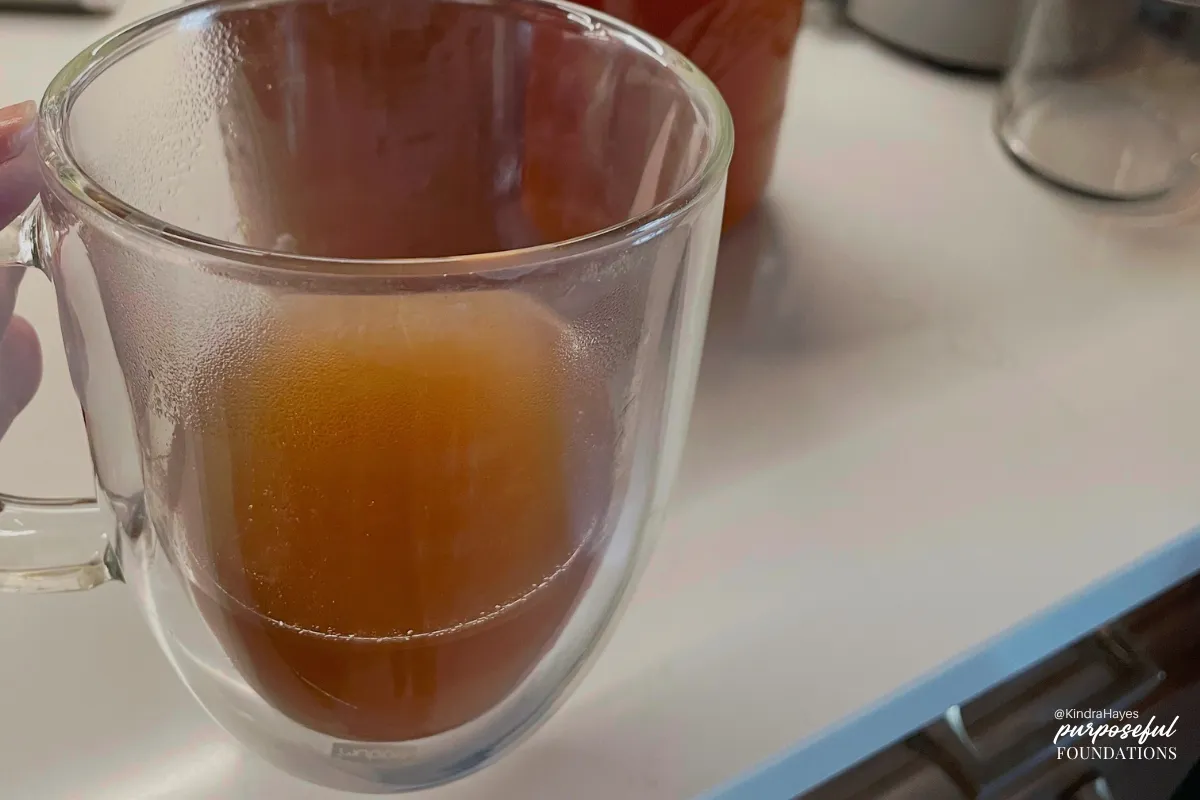
I ladle it over rice, sip it plain from a mug, use it for soups, or turn it into the kind of congee we just talked about.
Foundations First, Even in the Kitchen
This is one of those meals that reminds me why I keep coming back to the same philosophy.
Better health doesn’t always require adding another supplement, powder, or complicated protocol.
Sometimes it looks like a pot on the stove, simple ingredients, a little patience, and food that actually nourishes you.
Foundations first. One purposeful choice at a time.