Hitting a 3 PM Wall? How Balanced Meals Can Support Blood Sugar and Energy
Hitting a 3 PM Wall? Your Blood Sugar May Be Part of the Picture
Do you hit a wall somewhere between 2 and 4 PM most days?
You grab another coffee. Maybe something sweet. You push through until dinner and wonder why you’re suddenly starving, irritable, or standing in the pantry looking for the fastest thing you can eat.
It’s easy to chalk that up to a lack of willpower.
But sometimes, your afternoon energy and cravings have much more to do with what happened earlier in the day.
One of the foundations we look at in Nutritional Therapy is blood sugar regulation, and understanding a few simple principles can completely change the way you build your meals.
Blood Sugar Is Meant to Rise and Fall
When we eat carbohydrates, our bodies break them down into glucose, which enters the bloodstream and provides an important source of energy. That rise in blood glucose signals the pancreas to release insulin, helping move glucose out of the bloodstream and into cells where it can be used or stored. This is normal.
The goal isn’t to keep blood sugar perfectly flat or avoid carbohydrates altogether.
What we’re trying to support is a more gradual rise and fall rather than repeatedly swinging between feeling energized, crashing, craving something sweet, and starting the cycle again.
The afternoon crash can sometimes start at breakfast.
Imagine a morning that looks something like this:
A quick bowl of cereal or granola bar.
Coffee.
You get busy and push lunch later than planned.
By 2:30, you’re exhausted and looking for sugar or another caffeine boost.
That afternoon craving didn’t necessarily begin at 2:30. Your breakfast, meal timing, sleep, stress, hydration, and what you ate at lunch may all be part of the bigger picture. That’s why I like to ask:
What happened before the symptom showed up? Patterns give us information.
Carbohydrates Aren’t the Enemy
One of the first reactions people have when they start thinking about blood sugar is:
"So I need to cut carbs?" Not necessarily.
Fruit, oats, potatoes, rice, beans, and other carbohydrate-containing foods can absolutely be part of a nutrient-dense diet. Instead of automatically removing carbohydrates, one simple strategy is to think about what you’re pairing with them. Protein, fat, and fiber can help make a meal or snack more satisfying and may help slow digestion and the absorption of glucose.
That leads to one of my favorite easy-to-remember nutrition tips:
Don’t Let Your Carbs Go Naked
I don't mean you can never eat a piece of fruit by itself again. Think of this as a practical tool rather than another food rule. When you’re building a meal or snack, especially if you notice energy crashes or that you're hungry again shortly after eating, try pairing your carbohydrate with protein, healthy fat, fiber, or a combination of the three.
Instead of:
Banana alone
Try:Banana + almond butter
Instead of:
Crackers alone
Try:Crackers + turkey, cheese, or hummus
Instead of:
Plain oatmeal + fruit
Try:Oatmeal + protein + walnuts or chia seeds
Instead of:
Fruit smoothie
Try:Fruit + Greek yogurt or protein powder + chia or nut butter
Same carbohydrate. Different meal composition. And potentially a much more satisfying experience.
Try This This Week
Choose one meal to experiment with. Breakfast is often an easy place to start. Before you eat, ask:
Where’s my protein?
Where’s my fiber?
Do I have some healthy fat?
What carbohydrate am I including?
You don't need to redesign your entire diet. Make one purposeful adjustment and then pay attention. How hungry are you an hour later? Two hours later? How is your energy? Are you thinking about food constantly? Do you still find yourself reaching for something sweet at 3 PM? Your body's response gives you information we can use.
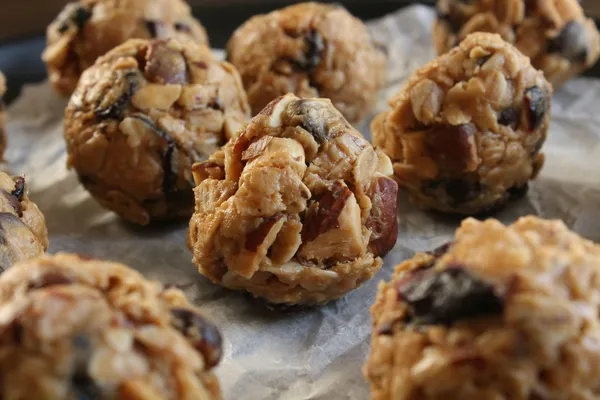
Almond Butter Energy Bites
These make an easy grab-and-go afternoon snack.
Ingredients
1 cup rolled oats
½ cup natural almond or peanut butter
3 tablespoons honey or maple syrup
2 tablespoons chia seeds
2 tablespoons mini dark chocolate chips
1 teaspoon vanilla
Pinch of sea salt
Directions
Mix everything together until well combined.
Refrigerate for 20–30 minutes, then roll into approximately 1-inch balls.
Store them covered in the refrigerator for up to a week.
Make Them More Protein-Forward
The original recipe provides fat, fiber, carbohydrates, and some protein, but if you want a more substantial snack, you could pair a couple of energy bites with something like Greek yogurt, a hard-boiled egg, or another protein source.
That’s another example of building instead of restricting.
Blood Sugar Regulation Is a Foundation, Not Another Diet
You don't need to fear carbohydrates. You don't need a continuous glucose monitor just because someone on Instagram has one. And you certainly don't need another restrictive plan that you can't imagine following six months from now. Start with the foundations. Build balanced meals. Eat consistently enough for your needs. Include adequate protein, fiber, and healthy fats. Pay attention to patterns. And make adjustments on purpose, with a purpose.
Better health doesn't have to begin with a major overhaul. Sometimes it begins by changing what you pair with your banana.
One step. One layer. One foundation at a time.